
What Is Inventory Management? Meaning, Methods and Examples
Inventory management is the process of ordering, storing, tracking, and using stock so your business always knows what you have, what you sold, and what you need to reorder.
This guide is useful for small businesses and traders across India managing daily stock and billing.
When you are ready to apply these ideas in software, inventory tracking software and stock management software help connect billing with live stock updates.
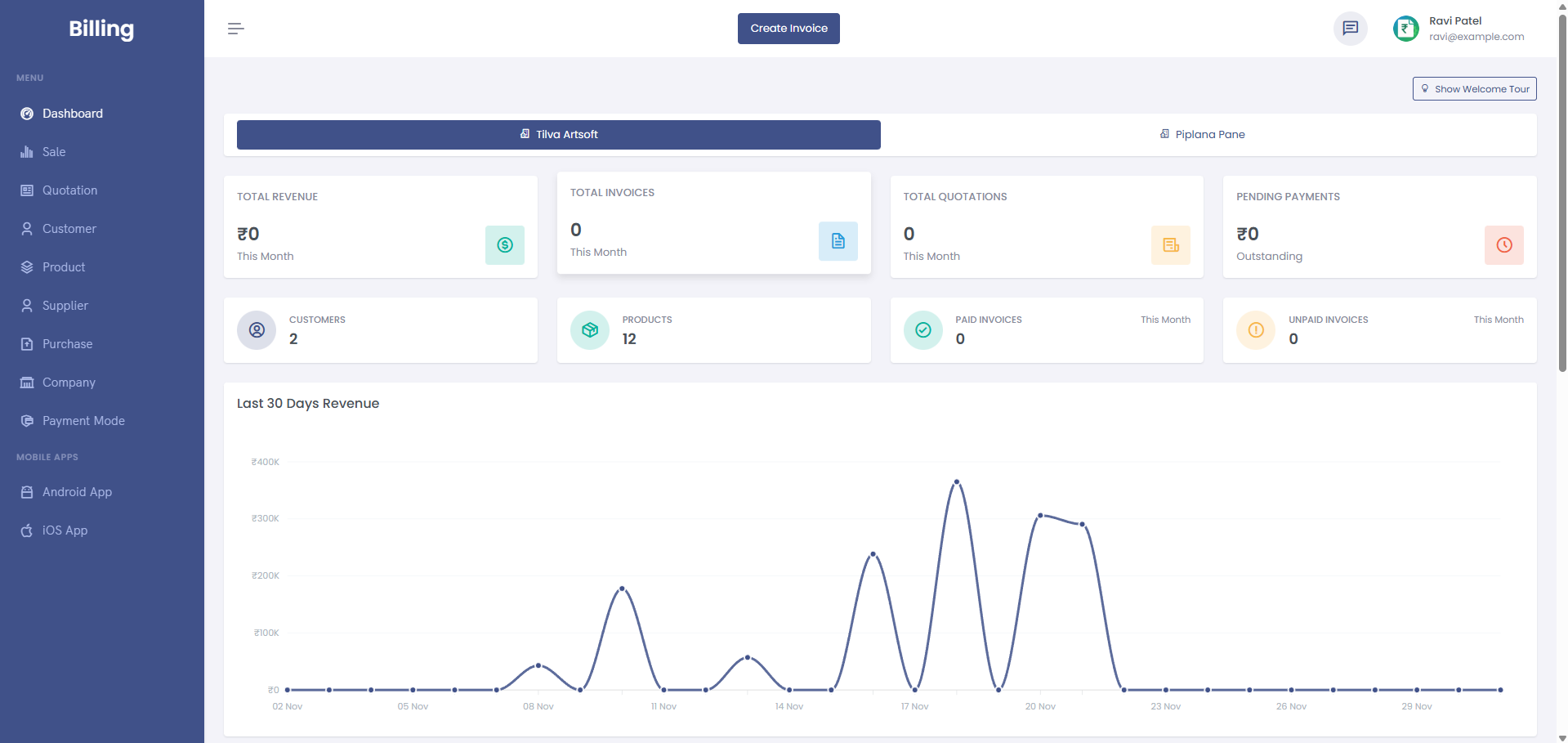
What Is Inventory Management in Simple Words?
In simple words, inventory management answers: how many units you have, where demand is high, when to reorder, and how sales change your stock.
Good inventory management reduces overselling, dead stock, and emergency purchases that hurt margins.
Start improving your inventory process today with a simple digital setup.
Common Inventory Management Methods
Most small businesses use one or a mix of these approaches before moving to integrated software.
Manual Registers
Daily stock notes or counter books. Works only at very small scale and depends on consistent discipline.
Spreadsheets
Excel or Sheets for item lists and formulas. Better than paper for sorting, but billing is often disconnected from stock.
Software With Billing
Stock updates when you purchase or sell, giving faster visibility and fewer mismatch issues during busy hours.
Compared to manual registers or Excel sheets, inventory management software provides real-time visibility, better control, and fewer stock mismatch errors.
Types of Inventory
Common types of inventory include:
- •Raw Materials: Items used to produce goods.
- •Work in Progress (WIP): Items in production.
- •Finished Goods: Products ready for sale.
- •Maintenance/Spare Items: Supporting materials used in operations.
Understanding these types helps businesses manage stock more effectively.
Inventory Management vs Stock Management
Inventory management focuses on overall stock control and planning, while stock management focuses on tracking quantities and movement. Both work together for efficient business operations.
Common Inventory Management Mistakes
- No regular reconciliation with physical stock
- Updating stock only at month-end instead of daily
- Same SKU tracked in multiple places with different numbers
- Ignoring slow-moving or dead inventory
- Overselling because billing is not linked to live quantity
Why SMBs Lose Money Without a Clear Process
Without a repeatable inventory process, businesses lose money through emergency purchases at higher rates, cancelled orders after overselling, and capital stuck in items that do not sell.
A simple rhythm—record purchases, record sales, review fast movers, reconcile stock—helps you protect margin and serve customers reliably.
Pair stock control with ledger software for clearer cash and credit visibility.
Simple Inventory Workflow
A practical workflow that matches how Indian SMBs operate day to day.
Maintain Item Master
Define products, units, and opening stock so every sale starts from a clean baseline.
Record Purchases
Add stock inward entries whenever goods arrive from suppliers.
Record Sales
Reduce stock automatically when invoices are generated so counters stay accurate.
Review & Reconcile
Compare system stock with physical counts and fix differences with notes.
Try this workflow now and manage your stock more efficiently.
Get started with free inventory software India on FreeGSTBill.
Real Use Case
A retail shop can track fast-moving SKUs during festival season, avoid selling out-of-stock items at the counter, and reorder popular products before shelves go empty—without maintaining parallel Excel sheets.
Businesses handling high-value products can use serial number tracking for better unit-level control and traceability.
For scan-heavy counters, explore barcode billing software alongside inventory management.
Frequently Asked Questions
Common questions about inventory management
Inventory management is the process of tracking, controlling, and optimizing stock levels so businesses can avoid overselling, reduce waste, and maintain efficient operations.
Small businesses depend on strong inventory management practices to protect margins, serve customers during peak hours, and avoid capital getting stuck in slow-moving or dead stock.
Stock tracking focuses on quantities and movement history, while inventory management includes broader planning such as reorder timing, purchasing discipline, and reducing excess or obsolete inventory.
Yes, inventory management software reduces manual calculation errors and helps keep billing and stock quantities aligned when purchases and sales are recorded consistently in one system.
Yes, many Indian SMBs start with free inventory management and billing tools to build daily stock habits, then scale workflows as product range, branches, or sales volume grows.
The basic steps include maintaining item records, recording purchases, tracking sales, and regularly reconciling stock with physical inventory.
Apply Inventory Management in One System
Using inventory management with billing and ledger software helps businesses maintain accurate stock and financial records together.
Trusted by growing businesses across India for daily stock and billing workflows.